

Meet the fish behind the familiar name
Lethrinops Intermedius belongs to Cichlidae, the cichlid family. Its accepted scientific name is Tramitichromis intermedius (Trewavas, 1935), although many aquarists still know it by the older Lethrinops name. Both names lead to this Lake Malawi fish, whose life centers on finding small food items in soft sediment.
Mature male color adds another reason to watch. Silver can give way to green, blue, yellow and orange highlights as a male develops and displays, while females and immature fish have a more restrained appearance. The fish's appeal includes the movement and social behavior behind that color, as well as the color itself.
Tramitichromis vs. Lethrinops: why the two names?
The confusion is understandable: we sell it under the familiar name Lethrinops Intermedius, but its accepted genus is Tramitichromis. Lethrinops remains a separate genus. The two names on this page refer to the same species through its naming history; they do not mean the two genera are interchangeable.
Ethelwynn Trewavas first described the fish in 1935 as Lethrinops intermedia. In their 1989 revision, David Eccles and Trewavas separated Tramitichromis from the broader Lethrinops grouping using the shape of the lower pharyngeal bone, particularly its downward-angled front portion. This bone supports the food-processing teeth in the throat, behind the mouth. Similar-looking sand sifters can differ in this hidden feeding anatomy.
That is why modern scientific references use Tramitichromis intermedius (Trewavas, 1935), while the older Lethrinops name remains familiar to aquarists. Knowing both names helps you connect older aquarium accounts with current research. The classification adds another layer of interest to the same beautiful fish: watch its changing color, foraging and displays to see why we enjoy it so much.
Following the Cichlidae family tree
Cichlid Room Companion places the species in the family Cichlidae, the African subfamily Pseudocrenilabrinae and the tribe Haplochromini, with Tramitichromis as its genus. These names describe progressively smaller branches of its classification. The aquarium term “hap” points toward that broader haplochromine group; it does not mean every fish called a hap belongs to the genus Haplochromis.
Trewavas's original account appeared in her synopsis of the fishes of Lake Nyasa, the lake now widely called Malawi. Her material included specimens from Fort Johnston, Monkey Bay and the southwest arm, connecting the fish's scientific history to places along the lake.
Why it is called intermedius
Intermedius means intermediate. Trewavas compared the fish's short snout, gill rakers and parts of its throat-jaw structure with one species, while finding similarities in the pharyngeal teeth to others. The name describes that combination of anatomical features.
The genus name has an anatomical story too. Christopher Scharpf's ETYFish account explains Tramitichromis through the Latin trames, a byway, referring to a departure in pharyngeal-jaw structure. It is a memorable name for a fish whose hidden feeding machinery helped scientists distinguish its group.
Lake Malawi beyond the rocky reef
Lake Malawi is one of Africa's great Rift Valley lakes, celebrated for the diversity and specialization of its cichlids. UNESCO recognized Lake Malawi National Park in 1984. Rocky shores are an important part of that story, but sheltered sandy bays support their own distinctive fishes and feeding behaviors.
Intermedius is endemic to Lake Malawi and associated with very shallow, sheltered places where sand carries a covering of finer sediment. Field accounts describe fish foraging alone or in small groups. A mouthful of bottom material can contain insect larvae and other soft-bodied invertebrates, making the lake floor a feeding surface worth searching repeatedly.
That ecology provides a useful guide for aquarium design. Leave accessible sand and open floor space where a fish can work through the substrate. Arrange shelters around that usable area so fish can break contact with one another while retaining room to forage and swim.
Inside our tank: September 2026
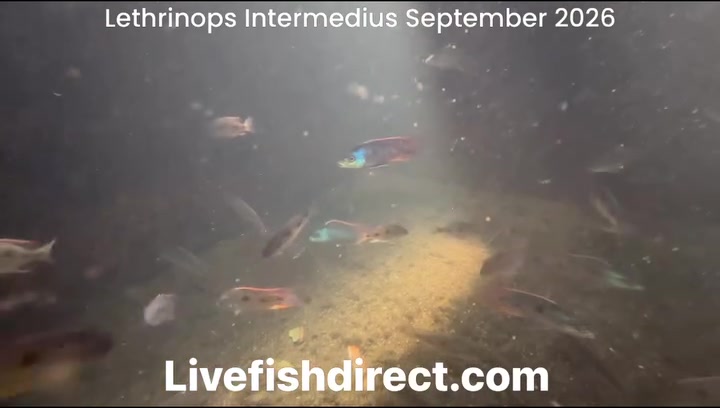
Our September 2026 LFD FishVision™ clip begins with a glimpse of the working farm before taking the camera below the surface with our Intermedius. A strong beam of natural sunlight cuts into the tank as fish move around the camera, showing their changing appearance as they turn. The recording keeps the natural tank and farm sound.
The dated footage shows fish at the farm at the time of filming. Use the current size, sex and color-stage descriptions in the buying options to choose what you are ordering; a filmed individual is not a promise about current inventory.
Sunlight, shade and spring water at our farm
Josh calls these fish “just beautiful,” and the light in their tank is part of what keeps drawing us back. In our experience, Intermedius develop their best color in a setup that combines beams of real sunlight with shaded space always available. The fish can move between the two, and the video captures that contrast in the working tank.
This group does very well in our farm's spring-water chemistry. Alongside brine shrimp snacks, the fish forage on natural shrimp and daphnia that arrive through the flow lines carrying our hot-spring water. These small food organisms are part of the daily life of this particular farm system.
The social activity is just as engaging. Josh sees the fish challenge one another daily, but in this group those encounters have stayed at display: he has not observed them beating each other up. That gives a more useful picture of their character than simply calling them peaceful. They interact and compete, while the aquarium still needs room for fish to withdraw.
Courtship has more than one signal
A displaying male can build and defend a courtship bower, a prepared area in the substrate used during spawning. Research by Jennifer Ripley and Phillip Lobel followed the species' reproductive behavior in aquaria, including male displays and females collecting eggs for mouthbrooding. The female carries the developing brood in her mouth, making her behavior and condition part of the breeding story too.
Their separate 2004 study uncovered a less visible part of courtship: males produced sounds accompanied by body quivering, although some quivers occurred silently. Both behaviors became more frequent near spawning. During courtship, these signals add another dimension to the male's display.
For a breeding aquarium, provide space for a male's territory and retreat areas for females. Keep known breeding groups separate from similar species if you intend to raise young with a clear identity. A shared display aquarium and a breeding group have different management needs.
Adult size, sand and water conditions
FishBase records a maximum total length of 16 cm, about 6.3 inches. Total length includes the tail. That gives a useful adult scale for planning, while the measurements on our live buying options describe the fish being offered now.
Plan for a base at least 120 × 38 cm (48 × 15 inches), preferably larger for groups. Provide smooth sand, open foraging space and secure shelters.
Seriously Fish recommends 24–28°C (75–82°F), pH 7.6–8.8 and hard water. Stable conditions, biological filtration and regular water changes support good care.
Feeding and choosing tankmates
Offer an appropriate prepared staple and small invertebrate foods. Check that these bottom-foraging fish get food despite competition.
Calmer, suitably sized Aulonocara peacocks and Copadichromis haps can be candidates. Breeding males defend territories; persistent chasing or missed meals calls for a different arrangement.
Avoid choosing an aggressive mbuna community for this comparatively gentle species.
Choosing your Intermedius at Live Fish Direct
Start with the aquarium you are building. Unsexed juveniles offer the experience of raising a fish through its development, but they are not an order for a confirmed male. A listed male option gives a different starting point; read its size and color stage alongside the photograph and video.
Male color changes with maturity, condition and social setting. Females have their own role in a breeding group, and subdued juvenile color does not make a young fish a lesser example of the species. Our current options separate size, sex and color stage so you can choose deliberately.
If you enjoy watching Malawi fish forage over sand, Red Cap Lethrinops offers another species account to explore. Compare its needs separately before planning a mixed group.
Sources and further reading
- Cichlid Room Companion — Tramitichromis intermedius
- Eschmeyer's Catalog of Fishes — accepted name and original description
- Ethelwynn Trewavas, 1935 — A Synopsis of the Cichlid Fishes of Lake Nyasa
- ETYFish — Tramitichromis and intermedius name origins
- George Turner, 2022 — discussion of Lethrinops genus history
- FishBase — size, habitat and biology
- M. K. Oliver — Tramitichromis intermedius and Konings field observations
- Ripley and Lobel, 2004 — acoustic and visual signals
- Ripley and Lobel, 2005 — reproductive behavior
- UNESCO — Lake Malawi National Park
- Seriously Fish — aquarium husbandry