


The view from above
Look down into our Taiwan Reef tanks and the white blaze catches your eye. From above, it seems to glow. As natural sunlight enters the hatchery, the fish sparkle beneath us, showing a side of themselves that a photograph taken through aquarium glass can miss.
There is a small feeding routine to watch, too. Shrimp breed in our water lines, and some arrive in the tanks with the incoming water. The Taiwan Reefs settle into position and patiently wait for a meal to come through. When we adjust the plants outside their tanks, they perk up again, attentive to the activity around them.
We have been breeding Taiwan Reef cichlids for 30 years, and these everyday encounters are part of why they have remained a favorite here.
The name on the aquarium label leads to an underwater outcrop in Lake Malawi, where a large boulder can provide a feeding surface, a display platform and disputed ground.
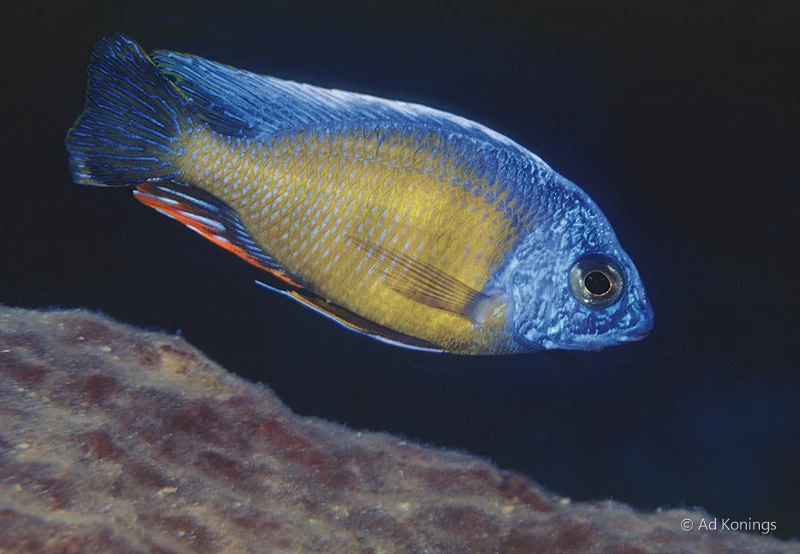
A reef below the surface
Taiwanee Reef lies roughly seven kilometres north-northwest of Wakwenda Retreat on Chizumulu Island. Its upper rocks are still about seven to ten metres underwater; beneath them, the bottom drops to at least a hundred metres. Picture an isolated rise of rock, with deep water around it, rather than a stretch of ordinary shoreline.
The familiar spelling has a human explanation. Ad Konings recalled mishearing Taiwanee as Taiwan. Local fishermen, brought aboard through Chizumulu-born boat operator Justus Chirwa, guided the expedition to the reef. Their knowledge belongs in the story alongside the name that reached aquarium shops.
Food, territory and a patch of algae
Taiwan Reef males feed by biting into the covering on rocks and sucking up loose algae and diatoms. A territorial male feeds within his defended area but leaves the spawning patch ungrazed; other herbivores are kept away too. The resulting growth can mark the breeding site. Females carry the developing brood in their mouths.
Food and breeding space overlap on the same rock. Defending that surface means keeping a place to feed while maintaining somewhere to spawn.
A field observation brings those boundaries to life. After visiting Taiwanee in 2001, diver Larry Johnson described males stationed around the edges of large rocks. When one moved toward the middle, another would meet it. Several fish could occupy the same broad structure, with encounters shaping how they used it.
Following the Steveni trail
The specialist name is Protomelas sp. ‘steveni taiwan’, a working name for an undescribed form. Steveni connects it with a group of similar Malawi cichlids familiar to aquarists. Within Protomelas, that group includes P. taeniolatus, P. fenestratus and other forms associated with rocky habitats.
Konings notes that P. taeniolatus was widely known as Hap Steveni. That older aquarium vocabulary carried into the working names for similar fishes, leaving a trace of the hobby's history on today's labels.
Many aquarists will recognize another name associated with P. taeniolatus: Red Empress. The scientific name refers to narrow bands, but the connection goes beyond markings. This fish also presses its mouth against rock and uses suction to gather food. Set the male colors aside for a moment and a shared feeding technique comes into view.
Beyond Taiwanee
The geographic trail reaches Higga Reef and Ngkuyo Island, too. The Higga fish became known as Chimoto Red; the Ngkuyo fish as Chimoto Yellow. Konings considered these populations possible examples of the same species as the Taiwanee fish.
Higga is a separate locality farther north. Ngkuyo is a small island about six kilometres southeast of Mbamba Bay, Tanzania. These names mark distinct places around the lake, each worth preserving in the history of fish collected there and their descendants.
Thirty years with the natural form
Our breeding aim has been to retain the appearance that drew us to the Malawi fish in the first place. We value the white blaze, the sparkle in daylight and the color that develops as the fish matures. After three decades of breeding them, we still find their natural appearance hard to improve upon.
That is the direction we have chosen for our Taiwan Reefs. Patience is part of it. A mature male portrait shows one stage of the fish's life; females have a quieter, barred appearance, and young fish can be much less conspicuous. Watching a fish develop has its own appeal.
Farm breeding matters to us for another reason: it gives hobbyists access to these fish with less reliance on collecting from Lake Malawi.
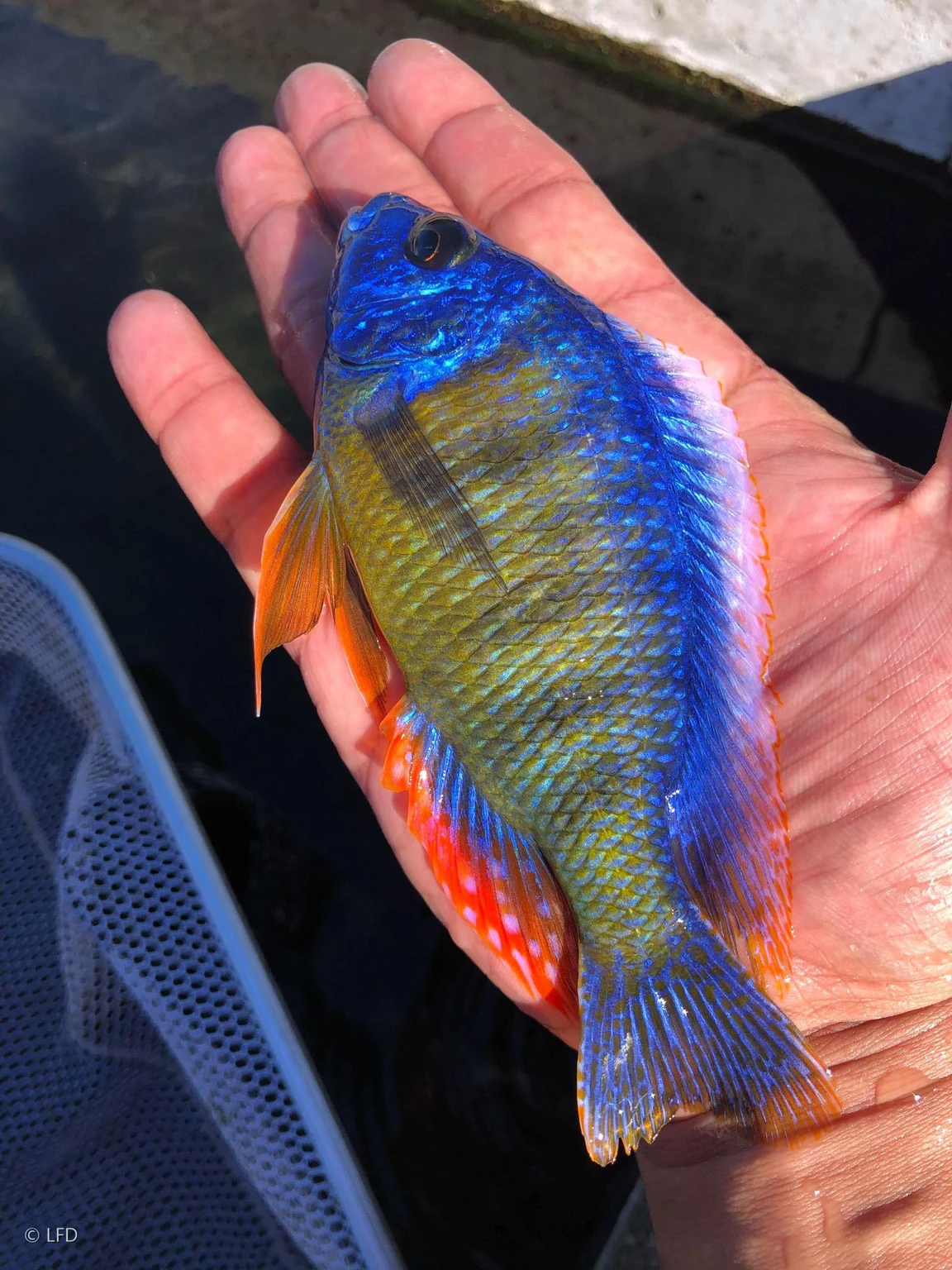
A staple hap with some presence
In our experience, Taiwan Reef offers a useful balance: enough size to hold its own, with a temperament we have generally found manageable. We find that a mature fish's presence can help steady the group around it. That combination is one reason it has become a staple hap for us.
In a home aquarium, plan around the adult fish, its territory and the other inhabitants. Choose companions thoughtfully and allow space for mature fish to establish their places. Our hatchery experience is a useful starting point; the behavior in your own aquarium deserves the same close attention.
And when you have the chance, take a look from above. That white blaze is still one of our favorite views in the hatchery.
Sources and further reading
- CRC locality account
- Konings's firsthand account
- Konings's species account
- Johnson's observations, recorded by Michael K. Oliver
- CRC genus account
- CRC Steveni Imperial account
- CRC taeniolatus account
- Higga locality in the 2013 description
- Seegers's Ngkuyo field account
- Fernandes's account of appearance and development